Recent Posts
Join 156 other subscribers
Find us on Ravelry

The Australian Sheep and Wool Show will feature the breeds of the Australian Stud Sheep Breeders Association (ASSBA) in 2012.
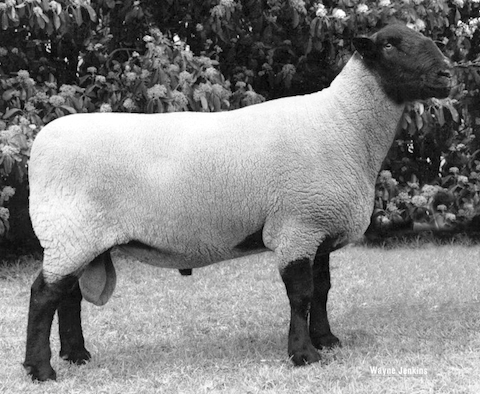
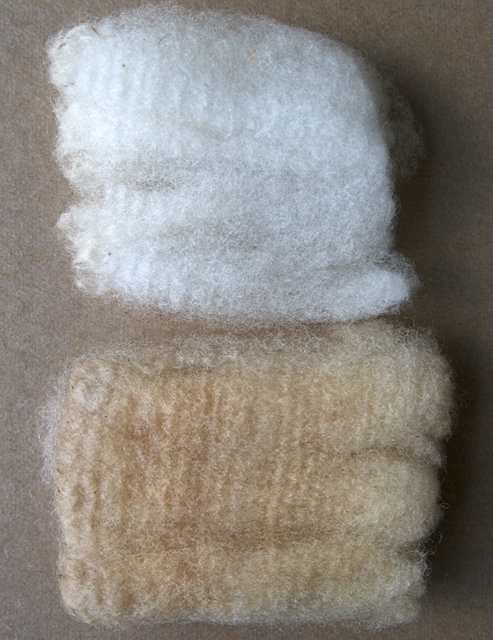
To provide a suitable sire for crossing with other breeds to produce the ideal prime lamb
Moderately short, close, fine fibre, without tendency to mat or felt together, and well defined, that is, not shading off into dark wool or hair. Suggested wool count 58s-60s
The ideal Suffolk ram should be well balanced and proportioned. He will be free moving and of alert appearance with masculine outlook.
The ideal Suffolk ewe will be similar, but with due regard to feminine characteristics and indicating good maternal qualities.
Head: Evidence of horns
Legs: Hocks too closely set
Skin: Not inclined to blue or spotted
Fleece: Black fibre or coloured wool throughout fleece. Black spots anywhere
General: Hornless. Face black and long, and muzzle moderately fine, especially in Ewes. (A small quantity of clean white wool on the forehead not objectionable.)
Ears: Not carried erect, of good length, black and fine texture
Eyes: Bright and full
Neck: Moderate length and well set. (In Rams, stronger, with a good crest)
Shoulders: Broad and oblique
Chest: Deep and wide
Back and Loin: Long, level, and well covered with flesh. Tail broad and well set up. The ribs long and well sprung, with a full flank
Legs and Feet: Straight and black, with fine and flat bone. Woolled to knees and hocks, clean below. Legs set well apart. Hind legs well filled with mutton
Skin: Fine, soft, and pink colour
Flesh: Even and firm handling all over
Belly: (also Scrotum of Rams) Well covered with wool
The Australian Sheep and Wool Show will feature the breeds of the Australian Stud Sheep Breeders Association (ASSBA) in 2012.

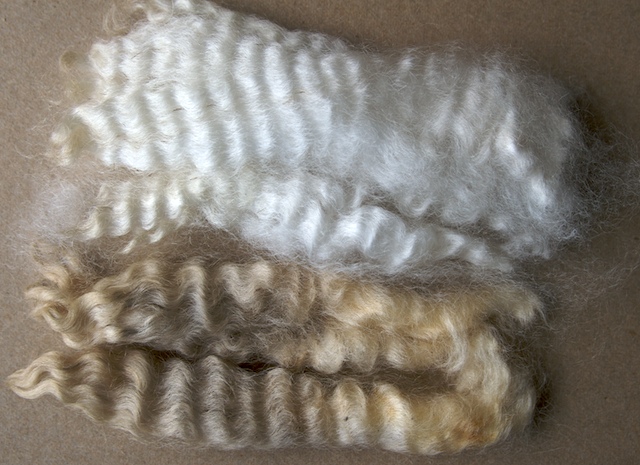
The Australian Romney is a large, dual purpose sheep producing strong, heavy wool and very good lambs, with a large proportion of twins. Crossed with other wool breeds the Romney will produce an ideal prime lamb mother with extremely good wool production. Over a period of time it has proven to be the sheep with one of the strongest constitutions and best feet of any breed in the higher rainfall areas of Australia.
It is a desirable feature of the Romney that the wool can range from 44s to 50s (30 to 40 microns) for individual strains of sheep. Each has its environmental place, its markets, and each should be grown to suit specific manufacturing needs. The fleece should be dense, but free opening and the staple well defined, full and oval shaped, not flat. In addition to being semi lustrous and soft, it should have the necessary bulk and handle well. Uniformity of covering is essential, should be maintained from the shoulder to the extremities. Weak or wasty back wool is not typical of the breed and is not acceptable.
The head, carried high, should be expressive of quality, character, and sex. A broad forehead, level between the ears, which should be of a good size, thick and felty and free from black spots. A wide poll, well covered with wool, free from kemp with no horns. The eyes should be large, bright and prominent, giving a look of alertness and vigour and the face full, and covered with a soft creamy, downy hair, almost free from wool. The muzzle should be preferably coal black with open nostrils, the jaw wide and strong with teeth meeting the pad correctly.
The neck should be strong and smoothly joined at the shoulders and should be no longer than necessary to preserve the balance of the animal. Shoulders should be well coupled and fit smoothly into the carcase of the sheep, and the blades must not on any account protrude above or even quite reach the top of the vertebrae. A flat heavy shoulder should be avoided.
The feet should be of sufficient size, and so shaped, that the toes will open with the weight of the body and preferably be of black horn, although a streaky foot should not disqualify. The pasterns should be strong and springy, and all legs set at points of perfect balance. The cannon bone should be of sufficient length to maintain adequate height off the ground. Hocks should be strong and set well apart, straight hocks, as with straight pasterns, are very objectionable. Brown or rusty hair on the legs is not acceptable.
Skin should be a healthy pink, free, soft and thick.
The Romney is a well balanced, stylish sheep with free movement.
The Australian Sheep and Wool Show will feature the breeds of the Australian Stud Sheep Breeders Association (ASSBA) in 2012.
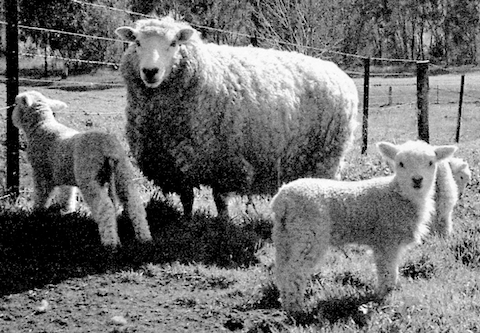

Perendale sheep are the progeny of second and subsequent crosses of Cheviot/Romney Cross sheep, i.e. Perendale rams or Cheviot/Romney Cross rams on Cheviot/Romney ewes, or Perendale rams on Perendale ewes. There are certain characteristics which have made the Perendale so popular in New Zealand and Australia as truly easy-care, multi-purpose sheep. The Perendales are:
A medium sized, white-faced sheep showing unmistakable Cheviot ancestry in its open face, the carriage of its head and neck and its ease of movement. Resemblance to its other parent, the Romney, is shown in its weight of fleece and, to a lesser extent, in its size.
Quality wool within the 32-38 micron range is acceptable for adult sheep; lambs and hoggets produce finer wools down to 28 microns. Staple long and regular over entire fleece. Crimp well defined and even from butt to tip. Colour an attractive chalky-white fleece, showing virtually no luster. Handle soft and bulky, with good density. Free of black fibres, rust, kemp and hair.
General: Strong without being over-large, wide between the eyes and broad in the crown, medium topknot desirable but not essential. Horns not permissible.
Face: Open, white and free of wool below the eyes. Black spots not permissible unless very minute. Nose should be broad, black and with good open nostrils.
Eyes: Dark, bold and intelligent, full of character.
Ears: Medium length, somewhat erect giving an alert appearance, soft to handle. Black spots though permissible are to be discouraged.
Neck: Strong and should hold head well up.
Shoulders: Not too heavy, but well-set. Withers can be a little higher than shoulder blades.
Chest: Wide, with plenty of heart room.
Back: Because of the withers being a little higher there is usually a slight slope to the tailhead, this is acceptable.
Ribs: Well sprung, with a good length loin.
Hindquarters: Firm and deep, well set to legs.
Legs: Medium length clean and bone not too heavy. Rust should be avoided.
Feet: Medium size and black.
Skin: Healthy pink colour.
Well balanced, free moving and stylish.
The Australian Sheep and Wool Show will feature the breeds of the Australian Stud Sheep Breeders Association (ASSBA) in 2012.
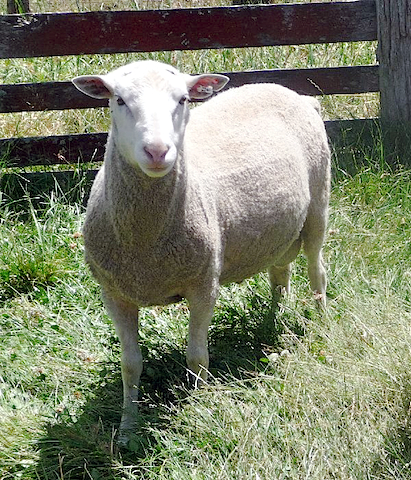

The Australian Finn (Finnish Landrace) breed is of northern European origin with the base Australian flock being descendants of the original importation into New Zealand in 1986. The Finn was first available in Australia in 1993.
Breeders must maintain the maternal traits of the breed, selecting for fertility, milking and mothering. Rams should be masculine and robust, with large, even, firm testicles.
Should be even, soft and lustrous. White wool with good even staple length and lock. Crimp well-defined and even from staple base to tip. There should be no kemp (short frosty fibres) or gare (stronger medullated fibre i.e. carpet wool fibre) through the fleece. Fleece should extend well up the neck to the ears.
General: of horns or scurs which do not move on the skull. Wedge shaped with a strong jaw not exceeding past the dental pad.
Face: Free of wool, covered with soft fine white hair. Lips and nostrils preferably pink.
Eyes: Well set, bright and alert, not protruding. Some pigmentation on eyelids preferred.
Ears: Medium, lively, mobile, pointed tips.
Back: Level and strong. Shoulders should be level with the back.
Hindquarters: Broad, square and deep well boned with reasonable muscling. Natural tail short (<15 cm), well set. Clean, short wool surrounding tail.
Legs: Medium length, free of wool, medium length pasterns that arc strong. Hooves are white.
Skin: Healthy pink, supple.
Low subcutaneous fat as body reserves are held around the internal organs.
Carriage is alert, free and active. Should be of good constitution with large abdominal capacity.

Sample Storyboard
 Woolcraft at the Australian Sheep & Wool Show